

KT157: The Addiction + Martin
Refracting the vampire genre, James Waters' FFFA highlights.

The Addiction (Abel Ferrara, 1995) and Martin (George A. Romero, 1977) have already screened at the Fantastic Film Festival as part of their Vampire Weekend.
CW: Sexual assault, self-harm
Words by James Waters
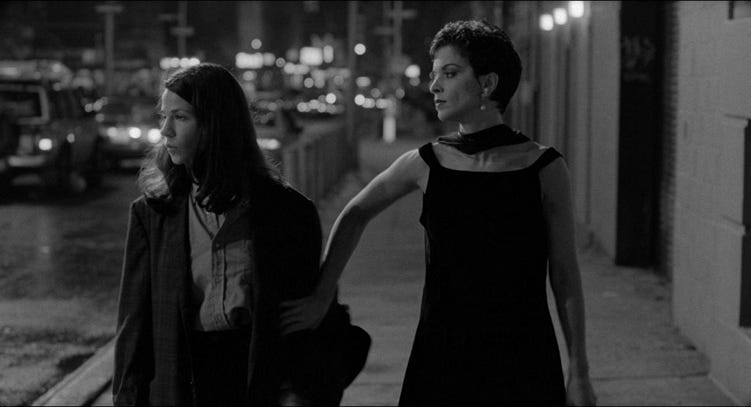
Two vampire films that recently played at FFA –Martin (dir. George A. Romero) and The Addiction (dir. Abel Ferrara) - find profundity through the omission of certain codes in their sub-genre. Ferrara’s film is animated by the question of consent, codified in Bram Stoker’s Dracula: that a vampire can only enter a home when given permission. Four minutes into The Addiction, Casanova (Annabella Sciorra) slowly approaches Kathleen (Lili Taylor), an NYU grad-student specialising in Continental philosophy. They’re two young women alone at night, standing together and united through momentary respite in downtown Manhattan. Casanova ingratiates herself with innocuous small talk, before dragging Kathleen down into a nearby sidewalk vault. Dracula’s customs are perverted when Casanova urges Kathleen to say “go away”, then attacks. Ferrara’s vampires enter when permission is declined, an existential threat to Kathleen’s lifework.
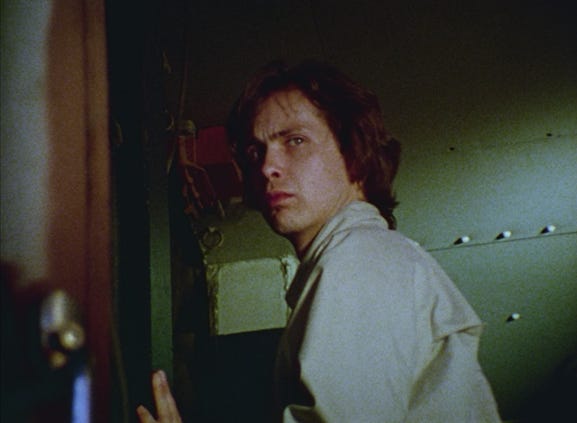
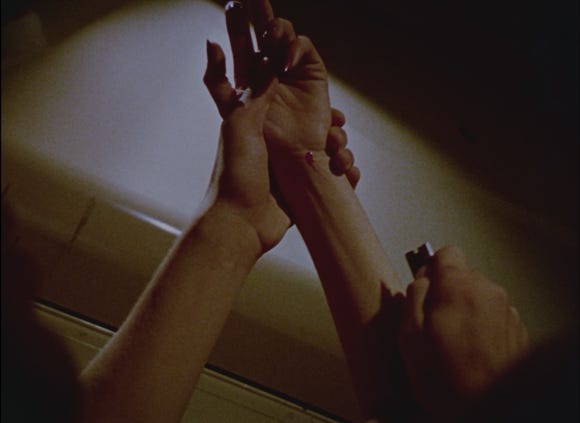
The opening of George A. Romero’s Martin shows the eponymous lead (Jon Amplass) boarding a train, while fixating on a woman behind him. Romero’s judicious edits orient the viewer on the cramped train compartment, where Martin (Jon Amplass) stakes out the woman’s sleeping car. Upon entering, Romero cuts to a flash-forward: a black-and-white fantasy of the woman waking up and opening her arms to Martin. Returning to colour, she notices him and they both freeze. He then rushes to pin her down and forcibly sedates her with a syringe. There are two, subsequent exchanges between them: she calls him a rapist freak and he repeats a hushed mantra (“It won’t hurt you, I promise”). Sexual assault is all-but-shown between manoeuvres as he undresses and intertwines with her, naked, before slashing her wrist with a razor blade and sucking the open wound. The slitting of her wrist – communicated in two insert shots, the first a failed attempt to break the skin – serves a practical function, as Martin has no fangs for incision and can scatter the blade with a bottle of pills to throw-off the postmortem. On a subliminal level though, the insert shots – sticking-out among Romero’s free-flowing montage – read-as suicidal ideation. Like the black-and-white fantasy, it’s a brilliant formal trick, visualising Martin’s pervasive psychoses and loosening grip on reality.
Martin arrives in Pittsburgh, taking up an offer of work and board from his older cousin, the Lithuanian Orthodox minister Tata Cuda (Lincoln Maazel). Cuda states his intentions almost-immediately: that he’s been instated by their extended family to purge Martin’s vampirism and initiate his salvation. The subsequent, black-and-white flashes alter after Cuda’s introduction: vignettes of Martin in period garb and playing with a young woman in an abandoned castle – a simulacrum of the narrative perpetuated by his family. Cuda’s insistence on Martin’s vampiric origin is permeating his tenuous grip on reality. Without an identifiable cause or remedy for his sickness, Romero’s positioning of two narratives – real and imagined, colour and black-and-white – doesn’t seek to resolve Martin’s affliction, but to contextualise it. As outlined in the opening scene, Martin can’t be a vampire - despite his family’s insistence.
A similar contradicting bloodlust animates Kathleen in The Addiction. After the encounter with Casanova, she proceeds to finish her PhD and convene her dissertation committee at a celebratory dinner, pretence for a ritual massacre/feasting. Bloodied and collapsed on the street, Kathleen is wheeled into the ICU and met again by Casanova in her room. Casanova’s re-appearance is a reminder of the cruel irony that instigated the film and Kathleen’s spiritual journey. The intervening bloodshed was the catalyst for her salvation; the necessary process through which her malaise could be purged. Resourceful filmmakers like Romero and Ferrara use the vampire movie as a starting-point to mine this profound, existential malaise, freely contradicting its genre rules in-order to do so.
James Waters is a writer and filmmaker based in Naarm/Melbourne.
The KT Calendar for May was simply impossible. 66% of editors are going to Cannes and we are publishing almost two articles weekly. Here are a few of the important things on this month…
Cinema Reborn May 8 - 17 at Lido
Brunswick Underground Film Festival (BUFF) May 14-17
ACMI:
Focus on Lav Diaz
Hong Kong Horror until May 18
Indonesian Film Festival until May 10
German Film Festival May 8-27 at Palace Cinemas
“G’day May”Australian Classics at Cinema Nova
Fantastic Film Festival until May 15 at Lido