KT152: Fiction Killer
On Denis Cooper & Zac Farley's new film, Room Temperature (2025).

Room Temperature had its Australian Premiere presented by Cupboard Magazine at Strawberry Gallery on the 5th & 6th of April.
Words by Fergus Menner
I remember well the evening that I finished reading The Sluts by Dennis Cooper. I lived alone then, and it was the first time going to bed that I was so scared I’d locked every lock on my door. (There were a generous three.)
The Sluts, published in 2004, won the Prix Sade, (self-explanatory) and was something of a breakout hit for Cooper. (Insofar as that is possible for an epistolary novel in forum posts that relays grotesque and absurd gay-male fantasies of murder and sexual violence.) Dennis Cooper had been publishing thematically similar works since the late seventies by that point, but was rarely heard of outside of cult fiction circles. The novelist/poet/critic is today something like the posterboy for gay, transgressive literature. Since 2015’s Like Cattle Towards Glow, an anthology of short features, he has written and co-directed films with fellow Californian and video artist Zac Farley. Melbourne’s celebrated fashion magazine Cupboard hosted the Australian premiere of Cooper and Farley’s latest effort, Room Temperature, for free last weekend at Strawberry Gallery in Brunswick.
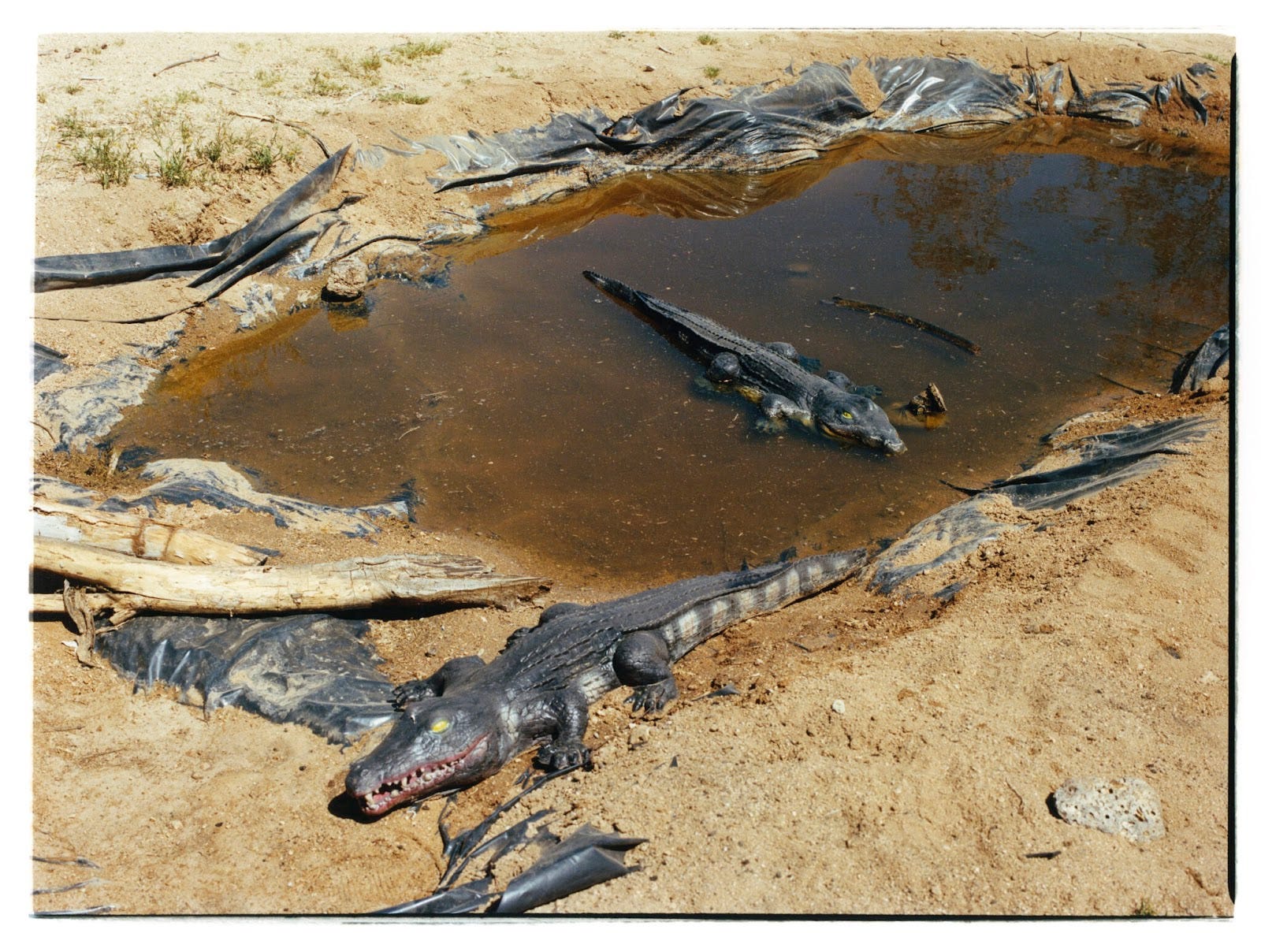
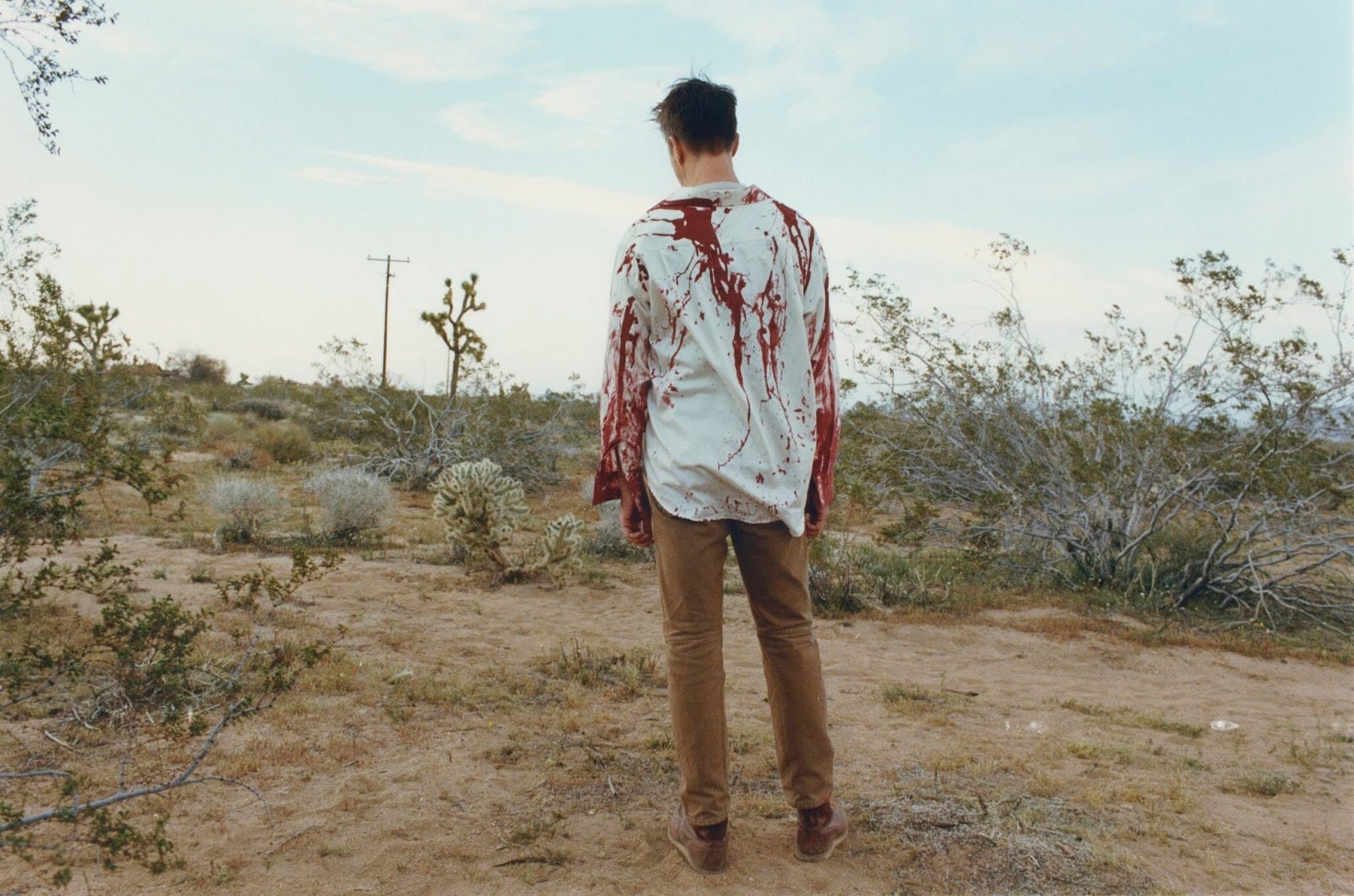
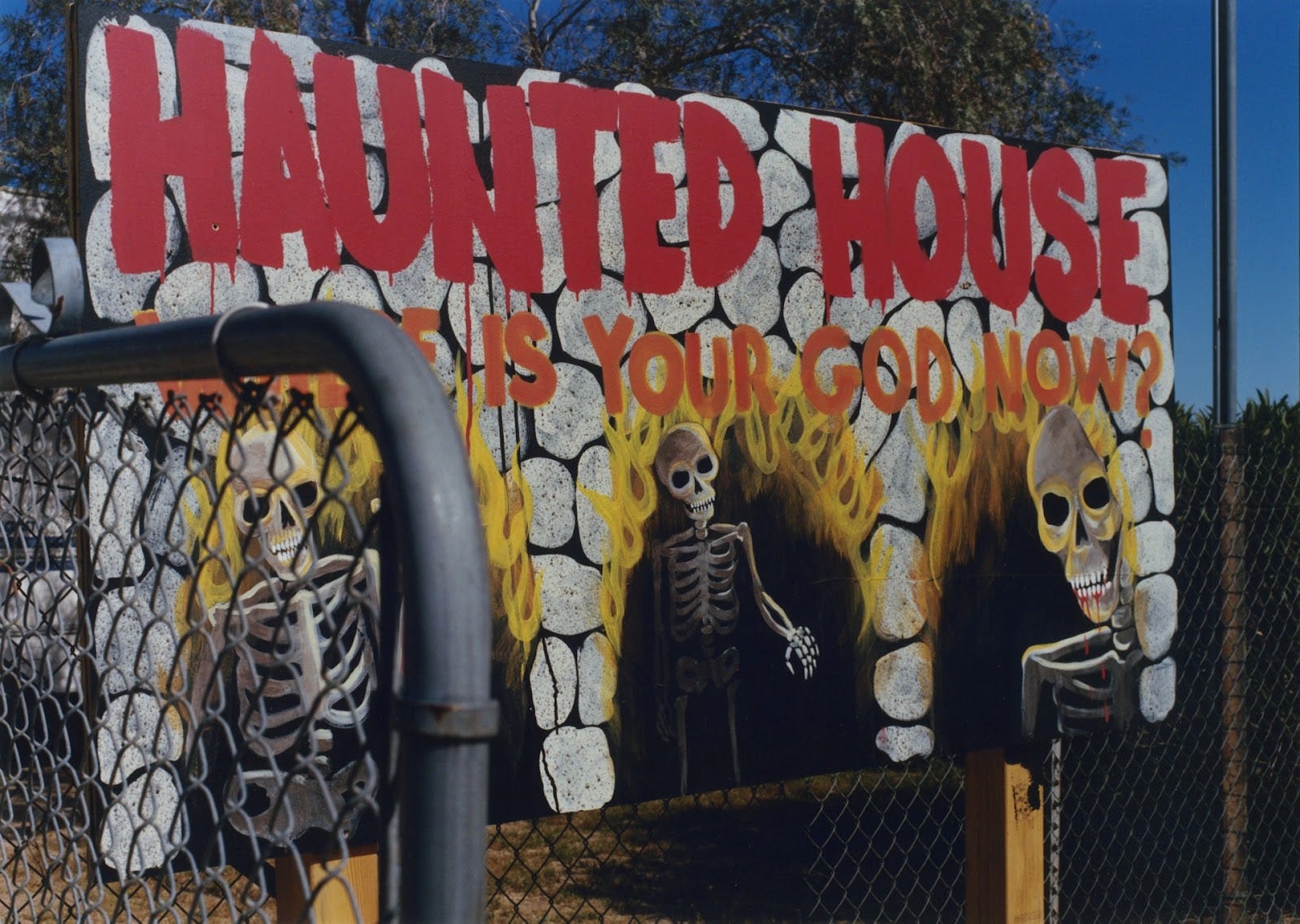
The family-made haunted house in Room Temperature is not scary. Dad (John Williams) is determined to make it so, but each year his actors forget their lines, the hired werewolves give up, and the scale model fake plastic alligators that populate the backyard ‘swamp’ only lay there unmoving. There’s a lot of blood in the film, but none of it is real; all cheap Halloween shop supply stuff. Odd, you might think, for a writer whose career is supposed to have been built on violence.
Yet rarely in Cooper’s work does actual violence figure; the murder is usually revealed to have been made up, forum hearsay or faked letters. Catharsis occurs in the interstice between believing and unbelieving, and this is a line that Cooper has been fixated with careerlong. Dennis, a character from an early novel, Frisk, grows up obsessed with snuff, only to realise the pictures were faked. Forum posters in The Sluts are titillated insofar as they are reading posts online, but whenever reality seeps in, and there’s mention of a newspaper article or police investigation, everyone’s turned off. Voyeurism is only fun until you get caught. Does Dennis, in Frisk, go on to become a murderer, or does he only go on to write about being a murderer?
Room Temperature at first appears to follow in the same line. Son Andre (Charlie Jacobs) wonders why Dad ‘wants to kill him,’ yet he’s never killed. Eventually someone else is, though, in the fakest, bloodless fashion, and this is ironically the haunted house’s undoing. Murder doesn’t save it, only makes it less scary; real death is without narrative, banal and un-fictional. The murdered ghost haunts the house, represented by steadicam, but doesn’t scare anyone, actually doesn’t interact at all, only looks on, unable to affect meaning.
The film, I think quite intentionally, shares little with the photographic qualities of Cooper’s writing. His prose style-wise is so clean as to read almost like young adult fiction, easy to mainline, yet sickening once it goes in. The movie instead lumbers tediously. For a film about homemade haunted houses it can be at times bravely unfun. Rather it functions as a kind of moral tale, a reverse poetics of Cooper’s overall project, warning against real death, the killer of fiction. If the haunted house in Room Temperature is the creation of art (to state the most obvious metaphor), then the father is a bad artist, and his work fails because he fails to understand this basic tenet.
Room Temperature succeeds as a warning but not always as a film, and the dialogue, while cleverly written, is delivered by all actors detachedly and blank-stared, a sort of Lanthimosian art film style that at worst comes off dated. I can’t help but appreciate Cooper and Farley for not straight adapting the novels though. If at times sluggishly arthouse, Room Temperature is nonetheless remarkable for its daring to be so. Tedium as a lesson in fiction creation.
Philip Roth once called baseball, ‘with its lore and legends…its mythic sense of itself,’ the ‘literature of [his] boyhood.’ I like to imagine Dennis Cooper, growing up in California in the seventies and eighties, reading the papers. The Hillside Stranglers, Co-Ed Killers and Night Stalkers, real and yet unreal, named characters in his own boyhood literature.
There’s still that spirit in Dennis Cooper, but time passes for us all. The novels always end and people really die. His 2021 novel I Wished is a eulogy for George Miles, the eponymous character of Cooper’s most infamous cycle of novels. Once the object of grotesque fantasy, this late-career novel, in contrast, renders him tenderly. (I Wished also features sex dream reworkings of John Wayne Gacy murders, among other things, so it can’t be said that he’s gone completely soft either.)
Room Temperature and I Wished as late-career works both feel like challenges to his detractors—those that would shelve him among the more one note alt-lit-weird-fic-horrorists that he largely influenced. This is a writer for whom ‘confusion is the truth’ is an oft stated motto, after all. A friend of a friend once met Dennis Cooper. He ostensibly asked him, ‘You’re cute; can I kill you?’ which reads like a line he’d write for himself.
Katies is SOLD OUT!
On Tuesday March 24, KinoTopia launched our very first print magazine ‘Katies’ at ACMI.
If there is a copy set aside for you - please pick up at Asphalt Books in the CBD.
Thank you to everyone who contributed writing, art work and ads and especially to our creative design team — Megan Ng and Deanna-Rae Ciconte. We could not have done this without the help from our expertise editor Eddie Hampson.
Until next time!