145: Five Easy Pieces (Bob Rafelson, 1970)
Jack K. on Melb Cinémathèque's next instalment in their Road Movie season

Five Easy Pieces screens next Wednesday (18th of February) at 8:55pm as part of the Melbourne Cinémathèque’s latest season: “You Can Never Go Fast Enough”: The Early 1970s Road Movies as the Quintessential New Hollywood Genre. For tickets and more information click here.
Words by Jack Keenan
We often remember the 1960’s in terms of its utopian projects: the civil rights movement, women’s liberation, psychedelia, “peace and love”. Yet it was also a time that saw the development of a new breed of machismo and male chauvinism. The hard-boiled bravado I have in mind takes its inspiration from detective fiction, the novels of Henry Miller and the mythos of modernist art heroes like Picasso, Schoenberg and Ezra Pound. This type found a form in the hipster. The hipster was first figured as a beatnik blend of jazz, existentialism and criminality. With rock’n’roll and James Dean the hipster found a new costume: sunglasses, leather jacket, motorcycle and electric guitar. While the hipster continued to change with the times, it was in the sixties that this type cemented itself as a cultural mainstay.
The young men of the baby boom were the hope that the older generations were riding on to rebuild society after the war. Accordingly, they were spoiled with social and economic opportunity. The changing mores of the ‘60s spoiled these same men with a degree of sexual license hitherto unknown. Meanwhile, the rise of drug culture and popular music provided countless opportunities for celebrating and indulging in all the pleasures and excesses this heady time had to offer.
Bob Rafelson, the director of Five Easy Pieces, and his right-hand man, Bert Schneider, received just about everything that the 1960’s could offer young men. The pair met while working in Hollywood for Columbia Picture’s television subsidiary. They were both Jews from the East Coast. Bob had studied philosophy at Dartmouth, while Bert had been expelled from Cornell for gambling and flunking classes. Rafelson’s first cousin, Samson, forty years his senior, had written screenplays for Ernst Lubitsch in the 1930s. While Bert’s father, Albert Schneider, was the president of Columbia Pictures.
The studio system was flagging in the sixties. Now controlled mostly by lawyers and financiers, the film industry had lost its spirit to Wall Street and its audiences to television. Frustrated at the state of the industry, Bob and Bert decided to found their own company: Raybert Productions. With their first venture, a TV show called The Monkees, they struck gold. It was a situation comedy following the daily goings of the eponymous rock group that Bob had assembled by putting a call out in the paper. The show was a huge hit and propelled the pair into the lavish circles of high-Hollywood. It was about this time that the pair made friends with a young actor and screenwriter named Jack Nicholson.
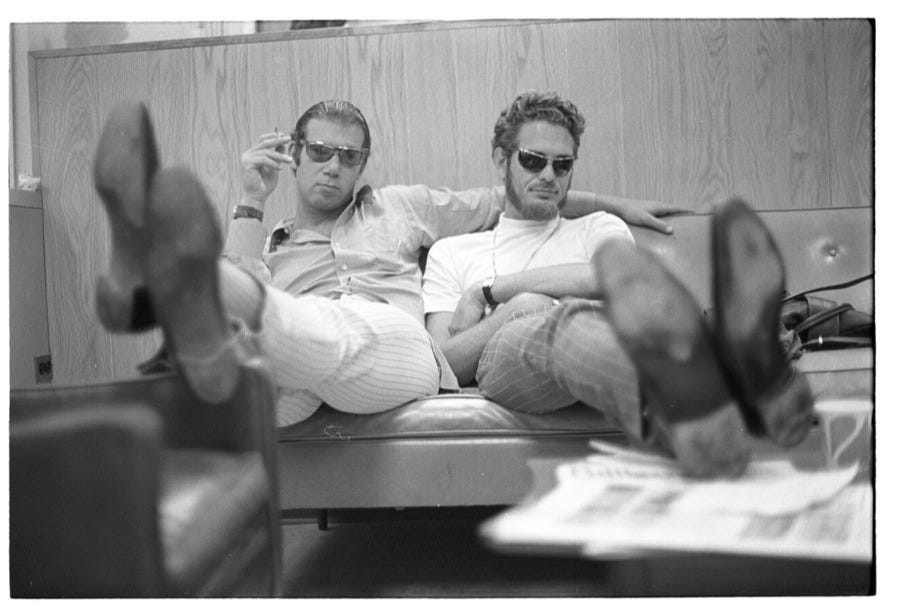
The trio of Nicholson, Rafelson and Schneider gained notoriety on the party circuit for their charisma, drug use and sexual promiscuity. Peter Biskind, in his book Easy Riders and Raging Bulls, wrote that among the Raybert guys,
“…sexual exploits [were] a variation on who could piss further. No one would hesitate for a moment before discussing the texture and flavor of his wife’s or girlfriend’s vagina; Bert’s favorite term for it was “poozle.””
Dennis Hopper, who outperformed even the Raybert guys when it came to vice, chauvinism and narcotic excess, met Rafelson at a party in 1968. Hopper pitched Bob the concept for Easy Rider and a deal was struck. Thanks to Hopper’s paranoid moods, violent outbursts and general megalomania, the production of Easy Rider was wracked by catastrophe. Despite its troubled gestation, when the film premiered in 1969 it was a colossal success. Easy Rider turned over almost twenty million against the film’s half a million dollar budget. The triumph of Easy Rider signalled that counter-cultural films could make big money. In consequence, Bob and Bert signed a contract with Columbia that gave them total creative control over their future productions, provided costs remained under $1 million.
The finest film to come out of this deal was also the first one made. With Five Easy Pieces, Bob and Bert realised the dream that inspired them to found Raybert. They were financing films that gave American directors the creative freedom the Europeans studios had been permitting their auteurs across the Atlantic. Jack Nicholson, hot property after his show-stealing supporting role in Easy Rider, was cast in the lead role. Five Easy Pieces would establish Nicholson as New Hollywood’s premier leading man.
Five Easy Pieces follows Bobby Dupea (Nicholson), the son of a family of classical musicians who has turned his back on his well-healed heritage to work the oil fields in Southern California. Shacked up with an aspiring country singer named Rayette (Karen Black) who he openly disdains, Bobby bums around bowling alleys drinking beers and picking up stray chicks until word comes from his sister (Lois Smith) that their father has suffered a stroke. The news occasions a road trip up to the family home in Washington where Bobby meets his brother’s fiancé Catherine Van Oost (Susan Anspach) whom he shares an immediate sexual chemistry with. The tension between Bobby and Catherine constitutes the dramatic crux of the film. Unsurprisingly, Catherine’s engagement forbids the development of their romance.
The virtues of the film are its realist tone, striking albeit civil photography and note for note perfect performances from Nicholson, Anspach, Smith and Black. Yet the substance of the film, its intrigue, lies in the enigma of Bobby Dupea. Billed by some critics as an American Meursault, Nicholson’s character lacks the qualities of your traditional protagonist: his motivations are obscure, he is unsympathetic (although charismatic), cruel, domineering and unprincipled. He does not seem to know what he wants, or what he does want is impossible.
In one revealing scene, Catherine asks Bobby to play something for her on the piano. (Bobby was a pianist before he started working oil rigs). He agrees and plays a prelude by Chopin. She responds:
“That was beautiful Robert, I’m surprised.”
“Thank you.”
“I was really very moved ––”.
Bobby snickers.
“What’s wrong?”
“Nothing it’s just, hah... I picked the easiest piece I could think of, and I first played it when I was eight years old, and I played it better then.”
“Can’t you understand it was the feeling I was affected by?”
Bobby grins, “I didn’t have any.”
“You had no inner feeling?”
“None”.
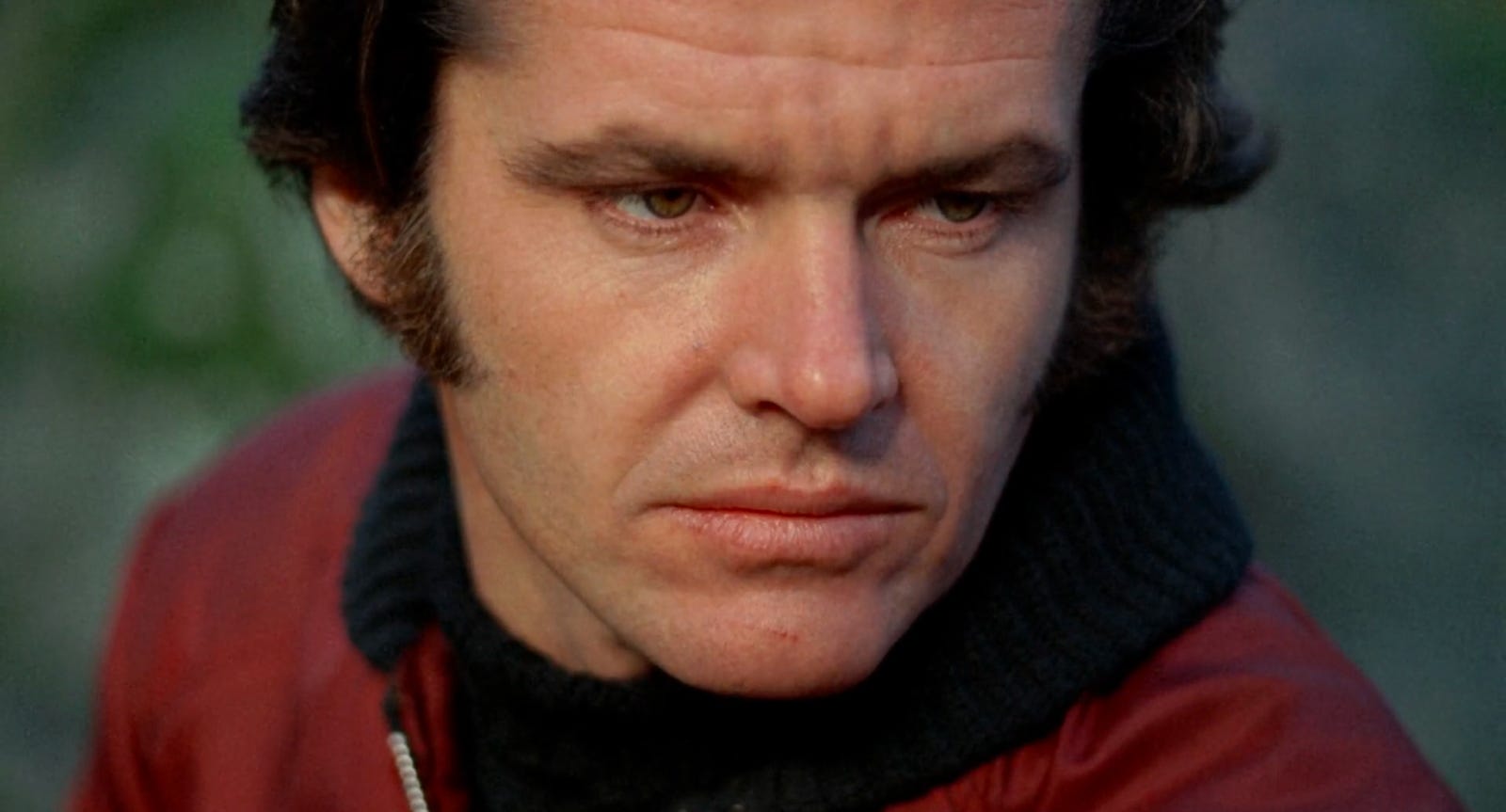
Perhaps the enigma of Bobby Dupea lies in the fact that despite his lack of inner feeling, he is not without desire. But without inner feeling, he does not know what he desires. He guides himself from the outside in. He suffers from hyper-rationality as much as he does from capriciousness. In this he resembles the psychopath, a personality type that Norman Mailer famously argued was continuous with the hipster. Dupea is probably more psychopath than hipster, although his waywardness, the non-conformist rebel in him, unmistakably channels hip.
Five Easy Pieces, interrogates the emptiness of the life of bravado Rafelson, Schneider and Nicholson were leading off screen. Bobby Dupea is the hard-boiled hipster brought to the existential limit of his empty interior. The great feat of the film is its delicate deconstruction of boomer machismo. The delicate critique ofBobby indicates Rafelson’s private knowledge and possession of Bobby’s qualities; and that’s to say nothing of Nicholson.
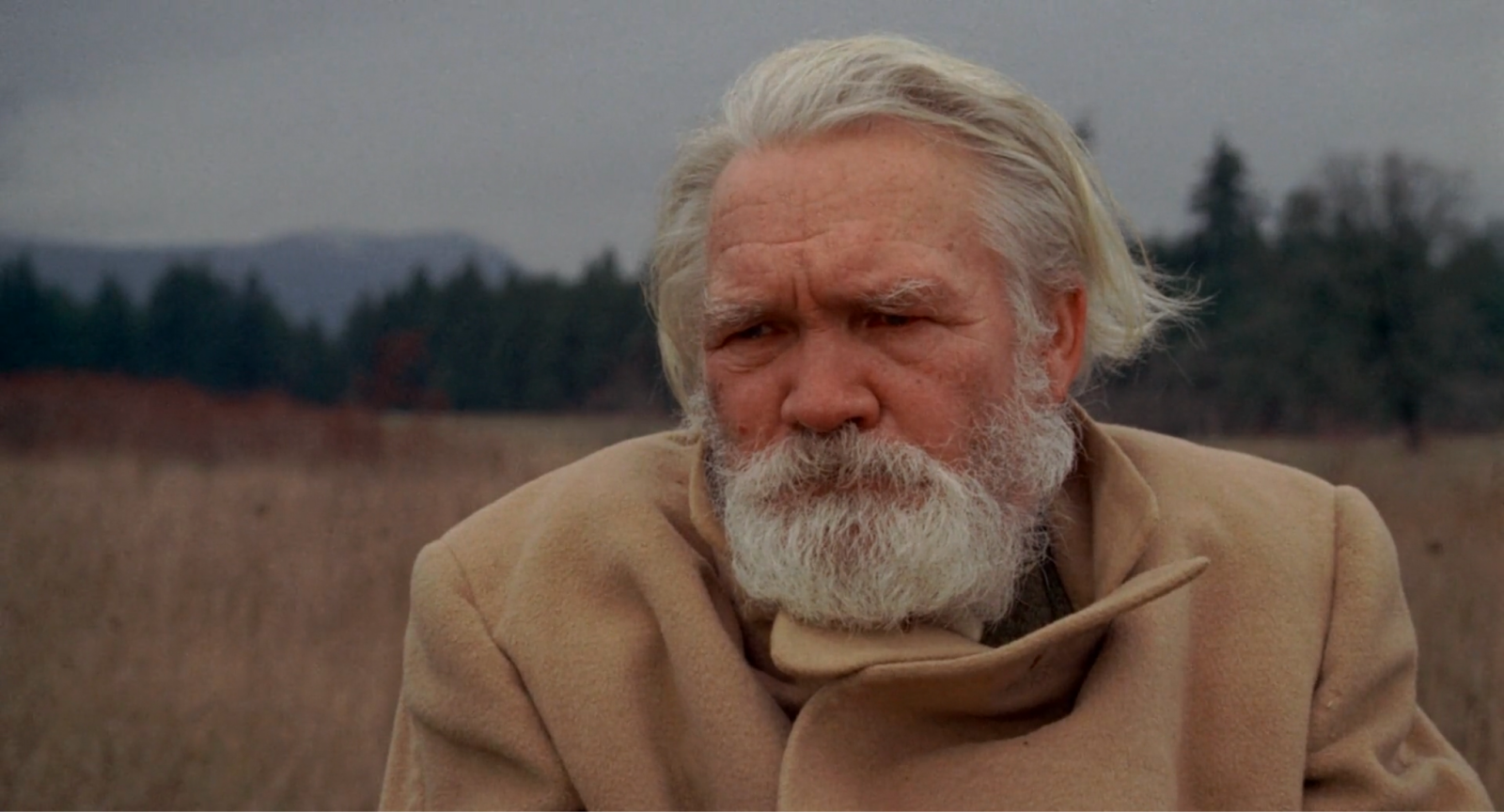
One moment of true feeling we see befall Bobby comes in a scene with his mute, wheelchair bound father. Secluded in a windswept pasture, Bobby opens up to the moribund man in a bid to repair ties and explain his estrangement. He attempts to defend his way of life. “I move around a lot, not because I’m looking for anything really but because I’m getting away from things that get bad if I stay. Auspicious beginnings… you know what I mean?” When the camera cuts to the father we see that he does not know what Bobby means. He has lost the hope he once had for the young man.